I had this conversation with a young man a few months ago.
Him: Do you still run?
Me: No. I stopped. I’m scared.
Him: Oh, sorry. I understand. Me too. I’m always scared of the dogs in the streets.
He said it kindly, with no malice. I thought: It must be nice to be a man. It must be nice when your only worry is dogs.
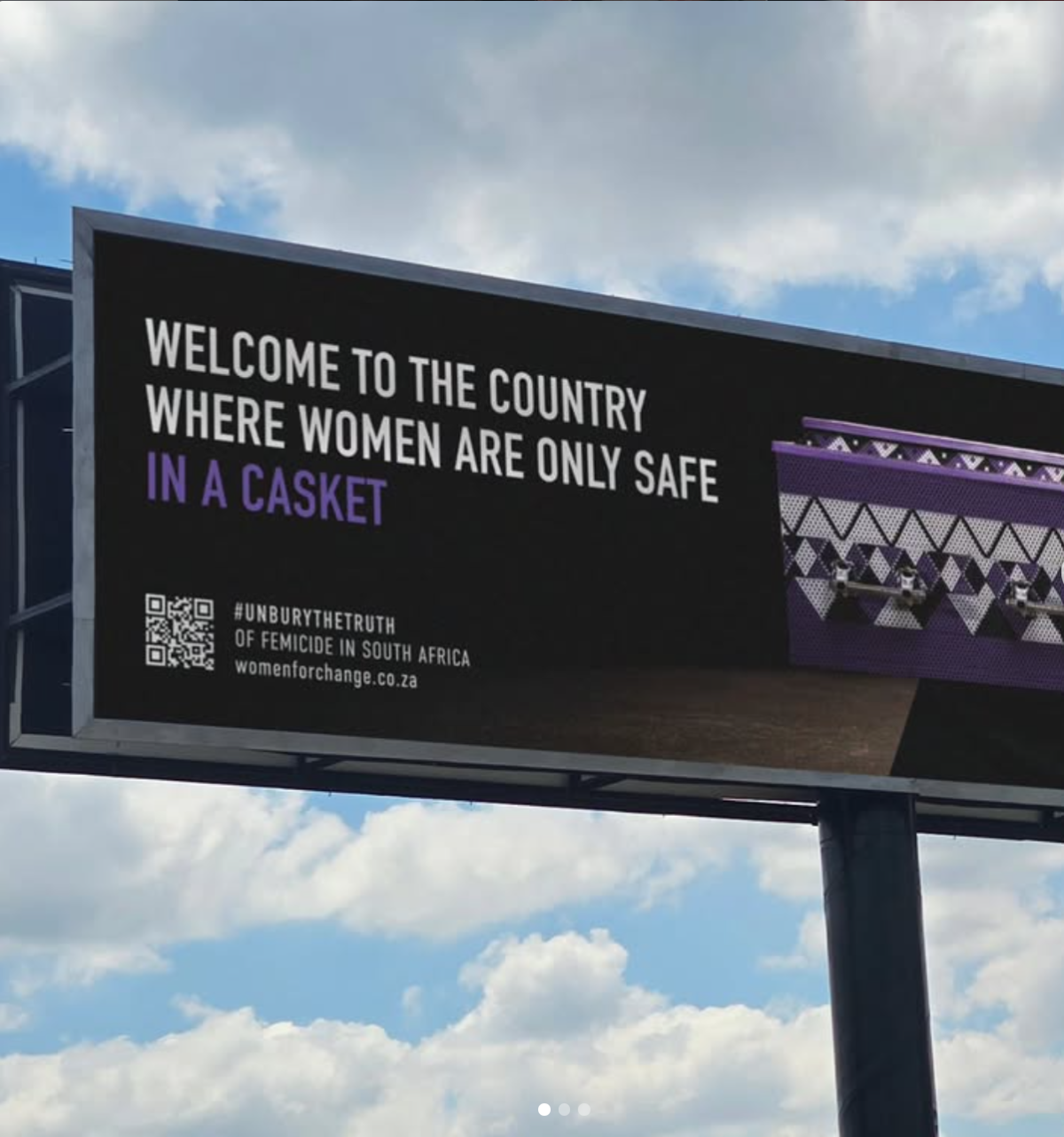
Tsontso went for a run. She never came back. Her body, like 9 others, was found a few days later, half-naked and wounded, in a park in Johannesburg. It’s making headlines. 10 women, a possible serial killer on the loose in Johannesburg, the frightening plot of a thriller.
But it is nothing unusual. 6 to 7 femicides happen EVERY DAY in South Africa. Five times the global average, which is already absolutely disheartening (just 2 numbers to keep in mind: 1 in 5 girls across sub-Saharan Africa have experienced rape or sexual assault before turning 18. In the world, a woman is killed every 10 minutes by a partner or family member).
In November last year, the government of South Africa declared gender-based violence and femicide a national disaster. Nothing has changed since, and we have all come to realise that the move was only aimed at calming down feminist associations making a little too much noise during the G20 in Johannesburg. It is painfully clear that Ramaphosa, like most world leaders, couldn’t care less about violence against women.
One positive thing is happening since the recent macabre discoveries, though: you, some at least, are speaking up. Late, long overdue, but it is happening and it is a good thing.
However, I read your posts and articles, and I see a huge misunderstanding. The same word is everywhere, PROTECT: “We must better protect our women.” “We must teach our boys to be protectors.”
I assume you are not talking about protecting us from Mozambican spitting cobras, since they are equally dangerous and scary to both men and women. No. You are talking about protecting us from the violence perpetrated by men. Don’t you see? You are falling right into the patriarchy’s trap. Men protect women. The strong protect the weak. The powerful protect the vulnerable, and in doing so, keep her down, where she will forever remain subject to abuse.
Men, we don’t want your protection. That is the work, or it should be, of the police and the justice system. This energy you put into wanting to protect us, use it to teach, call out and report your friends, sons, brothers, uncles, fathers. Every time, with no excuse and no exception. Use it to listen to us, to believe us, to never question our pain or minimize our fear. Use it to question your own behavior, your silent complicity in the system, your unconscious fear of losing the privilege of being born a boy in a world where women are taught to be afraid.
And once that is done, no protection will be required. You can go after the spitting cobra if you like, or just be equal partners, valued for who you truly are, in a much happier world.
September 2026
Love from the past
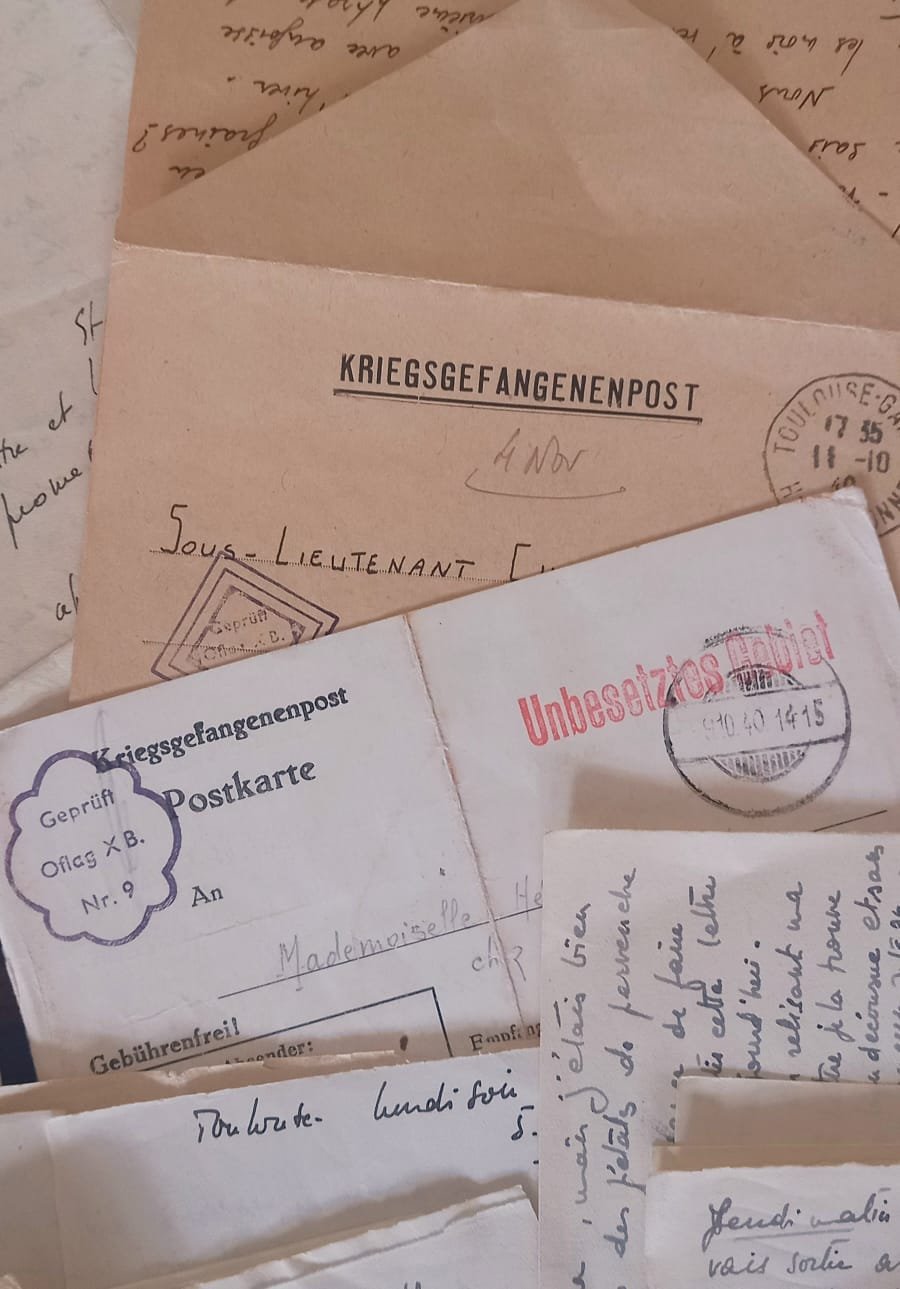
I have in my care, a little by chance, thanks to cousinly love and simply because that someone had to look after them, dozens of letters my grandparents wrote to each other between 1938 and 1947. For more than two years, I have circled around this bundle of thin papers covered in elegant loops and flourishes, these long missives of four, five, sometimes ten pages, and letter-cards stamped with the Oflag of Niemburg. I kept them close to my desk in a pretty bag within arm’s reach yet I never opened them. Out of a sense of illegitimacy for simply having them in my possession and stepping into their intimacy. Maybe also from fear of letting reality tarnish the legend my beloved grandparents have become. Until one day in September. I began by sorting them. Chronologically. His letters to her, her replies to him. I pieced the torn pages back together and eventually let myself dived into their words. It has been an emotional journey through history, through the birth of a love and the making of a couple that lasted 80 years, through the horror of war, and the stories of my own family. I am sharing here a few excerpts I selected for what they reveal about their time or simply because they moved me in a particular way. I am afraid though my translation cannot do justice to the elegance and the charming old-fashioned quality of their style.
1939
Him : “The pain is in the waiting. You brace yourself, but you don’t really know for what. War or no war? War, no doubt. But what kind of war? ”
Her : “This letter feels frivolous because I cannot bring myself to believe that in a few hours the world will be at war and my little universe will be destroyed. But I love France, and I will do what I can do. Hope is still there. Goodbye, C.”
1940
Him : “At times I feel like crying when I think of the appalling stupidity of war.” Him : “Pray that I may be courageous and for victory. Pray, and write to me.”
Him : “It’s me, C. It’s me, bringing with me the whole procession of wishes I’ve come to lay at your feet.”
1941
He is a prisoner in Germany. The letters are read and censored, so they exchange only banalities—or perhaps coded messages, like this one sent in October about… melons:
Her : “Since you’re interested in agriculture, I should tell you something strange, and quite new, about melons. In the South they were fleshy and seedless, but in the North it seems there were many seeds. On your side, did you have any? Weren’t there too many seeds?”
Him : “You have everything you need to be happy—be happy for me. Take my share of happiness.”
In November, he writes: “One more thing, H.: pray for me, especially now. One day I will tell you why […] Goodbye, H., be happy.”
… The next day, he escaped. A few days later, writing from France but in hiding, he says: “The thought of you gave me the courage to do it.”
1942
Him : “Pray that I will be worthy of our marriage, that I will be worthy of you.” Her : “You see, C., I would follow you anywhere because I love you – but I would prefer somewhere sunny.”
(NB: I must say this one is my absolute favorite, probably because I could, or have, said it)
Her : “I had a dreadful nightmare. I woke up sobbing. You had gone back to Germany.” Him : “Without you, H., life would be so awfully bleak.”
Him : “I love you, my dear H., to the point of tears. Forgive my craziness.”
1943-1947 Their first two children are born; they will eventually have five. He travels a great deal, and they continue writing to each other. Though filled with love, her letters reveal the condition of women at that time:
“I can very well imagine what a month with two children will be like. It will be slavery every single moment, at least for me.”
“Naturally, I feel less than ever like having number 3. I have a fierce desire to enjoy life! [...]. What a sad life! Wiping bottoms, always wiping bottoms!”
Almost a century of life, eighty years of marriage, five children, twenty grandchildren, forty three great-grandchildren, a long path traced through misfortunes, betrayals, griefs, family traumas, and all the joys, the small and the big. My grandparents have enchanted our summers and profoundly shaped our lives. Thank you.
Gaborone, 12/12/2025
1939
Him : “The pain is in the waiting. You brace yourself, but you don’t really know for what. War or no war? War, no doubt. But what kind of war? ”
Her : “This letter feels frivolous because I cannot bring myself to believe that in a few hours the world will be at war and my little universe will be destroyed. But I love France, and I will do what I can do. Hope is still there. Goodbye, C.”
1940
Him : “At times I feel like crying when I think of the appalling stupidity of war.” Him : “Pray that I may be courageous and for victory. Pray, and write to me.”
Him : “It’s me, C. It’s me, bringing with me the whole procession of wishes I’ve come to lay at your feet.”
1941
He is a prisoner in Germany. The letters are read and censored, so they exchange only banalities—or perhaps coded messages, like this one sent in October about… melons:
Her : “Since you’re interested in agriculture, I should tell you something strange, and quite new, about melons. In the South they were fleshy and seedless, but in the North it seems there were many seeds. On your side, did you have any? Weren’t there too many seeds?”
Him : “You have everything you need to be happy—be happy for me. Take my share of happiness.”
In November, he writes: “One more thing, H.: pray for me, especially now. One day I will tell you why […] Goodbye, H., be happy.”
… The next day, he escaped. A few days later, writing from France but in hiding, he says: “The thought of you gave me the courage to do it.”
1942
Him : “Pray that I will be worthy of our marriage, that I will be worthy of you.” Her : “You see, C., I would follow you anywhere because I love you – but I would prefer somewhere sunny.”
(NB: I must say this one is my absolute favorite, probably because I could, or have, said it)
Her : “I had a dreadful nightmare. I woke up sobbing. You had gone back to Germany.” Him : “Without you, H., life would be so awfully bleak.”
Him : “I love you, my dear H., to the point of tears. Forgive my craziness.”
1943-1947 Their first two children are born; they will eventually have five. He travels a great deal, and they continue writing to each other. Though filled with love, her letters reveal the condition of women at that time:
“I can very well imagine what a month with two children will be like. It will be slavery every single moment, at least for me.”
“Naturally, I feel less than ever like having number 3. I have a fierce desire to enjoy life! [...]. What a sad life! Wiping bottoms, always wiping bottoms!”
Almost a century of life, eighty years of marriage, five children, twenty grandchildren, forty three great-grandchildren, a long path traced through misfortunes, betrayals, griefs, family traumas, and all the joys, the small and the big. My grandparents have enchanted our summers and profoundly shaped our lives. Thank you.
Gaborone, 12/12/2025
The quest for a publisher, France versus UK/US
These past few months I have been busy with two daunting[1] tasks: finding a French, or French-speaking, publisher for my new novel; and finding an English-speaking one for the translated version of my last. In my quest, I have experienced the French publishing industry – although not new to me – and the British/American one. Two worlds apart, two different approaches, two philosophies.
In France, the writer submits her/his work directly to publishers. A novel is treated as art, in the noblest – and perhaps slightly hypocritical – sense. You don’t sell your work, you certainly don’t sell yourself (it is considered arrogant, vulgar even); your writing must speak for itself.
The first task consists of selecting the publishers you want to approach. This was for me, having worked with three publishers already, relatively easy. I know what I want, what I don’t want, which ones I will never get (too prestigious, too entre-soi, etc.), and which ones have a bad reputation. Then you submit a very succinct cover letter – don’t you dare sell yourself, arrogant-little-thing-who-do-you-think-you-are – and the full manuscript. And you wait and wait and wait. Don’t expect an acknowledgment, or a negative answer. With very few – and precious – exceptions, no answer after three, six, twelve (who knows?) months means no.
The first task consists of selecting the publishers you want to approach. This was for me, having worked with three publishers already, relatively easy. I know what I want, what I don’t want, which ones I will never get (too prestigious, too entre-soi, etc.), and which ones have a bad reputation. Then you submit a very succinct cover letter – don’t you dare sell yourself, arrogant-little-thing-who-do-you-think-you-are – and the full manuscript. And you wait and wait and wait. Don’t expect an acknowledgment, or a negative answer. With very few – and precious – exceptions, no answer after three, six, twelve (who knows?) months means no.
In the US and the UK, except for a handful of small publishers who accept submissions directly from authors, you must find a literary agent. It is the agent who will sign with the right publisher and manage your writing career. I must say the process of finding an agent is very confusing for a French writer. Among a database of thousands of agents in the US, UK, Canada, and Australia, you first select the ones who are 1) accepting submissions and 2) interested in the genre of your book. Let’s say this gives you a list of 500. Then, for each, you check their manuscript wish list – which is sometimes incredibly detailed and so, so disconcerting, like: “I am actively seeking stories of morally torn women ghosts in the Victorian period, but please no dragons,” or “I do not accept any manuscripts that will hurt my Christian values.” You also check their portfolio of authors, read their blogs, and if you feel they might be touched by your work, you submit. And now comes the even more confusing part: you must write a “query letter.” Such emphasis is put on this query letter, with dozens of articles, blogs, agent interviews, and forums on how to write the best one, that at times it feels like this letter is more important than your book itself. The query letter follows very specific rules. It must include the genre and often the subgenre of your work (is it historical? contemporary? crime? women’s fiction? Aaaaaaaah I don’t know, can it not be all of them??!!!). It must explain who the readers will be, how many books you think you will sell, what other books yours compares to, in which shelf of the bookshop it will be found, etc., etc. It is about business. Then, to the letter, you are only allowed to attach a synopsis of the book, sometimes the first 10 pages, or if you are lucky, the first three chapters. Only if an agent likes your query letter and the small sample will she/he request the manuscript. I read somewhere that getting 100 rejections is a minimum. But to get to that number, of course, you must submit to… at least 100. So you do that: research dozens of agents, rework your query letter according to their preferences – and submit, submit, submit.
Three months and about 150 submissions later in France, the UK, the USA, Canada, and South Africa[2], here are a few thoughts: I like the intimidating, solemn even, French way of doing it. Only my writing counts, not me. It is reassuring that literature is still considered an art. Although isn’t it a bit hypocritical… publishers must sell, and, if I may, their choices often reflect more appetite for no-risk-big-sellers than fine art… But on the other hand, let’s be honest. I want my book to be published, and I want readers to buy it. Is thinking about it that way, as the American/British process forces you to, so reprehensible?
I got a positive answer for one of my manuscripts last week. The champagne is still in the fridge; I am digesting the news, as if it were too good to be true. I will give myself a few more weeks… maybe I can find better, perhaps I can even choose, but who do I think I am…
To conclude, here is some advice, fruit of my modest experience, that I apply to myself and could help fellow writers:
· Do not waste time on horrific statistics (1 out of 3,000 manuscripts gets a publisher in France), or depressing rumours (publishers only read manuscripts from writers they know or who have been personally recommended).
· From previous experience, you don’t want to find a publisher, you want to find a good publisher.
· Stay real but dare. Submit to Actes Sud. Query J.M. Coetzee’s agent, and Chimamanda Ngozi Adichie’s.
· When, after 10 rejections in a single week, you start doubting your work, read your manuscript again. You will find a word to change, a spelling mistake, a comma to move. And you will think : ok, now it is perfect, let’s submit, this time will be the charm. · If the wait is too unsettling to write, keep taking notes for the next book, and, patiently, wait.
· Do not waste time on horrific statistics (1 out of 3,000 manuscripts gets a publisher in France), or depressing rumours (publishers only read manuscripts from writers they know or who have been personally recommended).
· From previous experience, you don’t want to find a publisher, you want to find a good publisher.
· Stay real but dare. Submit to Actes Sud. Query J.M. Coetzee’s agent, and Chimamanda Ngozi Adichie’s.
· When, after 10 rejections in a single week, you start doubting your work, read your manuscript again. You will find a word to change, a spelling mistake, a comma to move. And you will think : ok, now it is perfect, let’s submit, this time will be the charm. · If the wait is too unsettling to write, keep taking notes for the next book, and, patiently, wait.
[1] Writers know, the word is not too strong.
[2] The South African publishing industry doesn’t use literary agents. Writers submit directly to publishers, like in France, but with a notable difference: publishers always kindly answer, and explain the why of their rejection. Kindness is underrated I maintain, but this is another debate.
Existentialist crisis of a writer
« It takes courage to write. It also takes a degree of arrogance. We all have the evil editor demon who sits on our shoulders and whispers, “This story sucks. This prose is horrible. That sentence sounds like lead. That dialog is ridiculous. A box of cornflakes has more personality than my narrator.” On and on and on. It never shuts up. One of the biggest jobs a writer has is to ignore that voice. Remember — it is not your job to critique your work, especially when it isn’t done yet. Your job is to put the words on the page, that’s all. You have to tell the voice to shut up, that you aren’t listening, that you won’t pay attention. That’s all. It’s terribly difficult to do, and sometimes that voice takes over and can immobilize a writer, sometimes for months or even years. 1 Know that it is the demon voice. It is not real. This is one of those times when a writers’ group is great—THEY are the critics. It is for them to make a judgment, or the editor. It is NOT YOUR JOB. Tell the demon to get lost. One way to trivialize the demon is draw a picture of it. Make it silly. Color it in some stupid color, put it in ridiculous clothes. It is not a useful critic of your work, by the way. It’s only purpose is to keep you from writing. Know it for what it is, trivialize it, and ignore it. Do NOT try drugs/alcohol to get out of this. It may appear to help, but the work suffers. (Example: F. Scott Fitzgerald). Many writers abuse substances to shut up the demon (which means they get two demons for the price of one — such a bargain!) »
On her last point, I may not follow her advice as I have a bottle of Vosne-Romanée 2022 waiting only to console me — why deny it the pleasure?
But on the rest, she’s right. That twisted little voice is wearing me down. And it whispers far worse things than the ones listed above. Get lost, demon.
July 2025
June 2025 ... unsettling times.
Too many projects hanging in the air, so many uncertainties. It feels like I am on hold, or in apnoea. At some point I will have to have to get out of the water and breathe. Something will have to happen.
Witnesses, my fifth novel, is finished. Margaux, Ilyes and Angeline will soon be leaving me, and a second life will start for them. But not just yet, I need to find a publisher where they'll feel good. I read a few days ago that in France, one manuscript in 3,000 is published, and a published book that has sold 1,000 copies is considered a success. Rather distressing numbers for the author I am...
The very exciting plans concerning my novel Il fallait bien que quelqu'un le fasse are taking for ever to start. At least it feels like it. “Be patient Soline, says my producer, those things take time”. I know, I know, but who said I was patient?
So, frantically, I translate. I write (a short story, for The New Yorker, why not!). I make recipes from Ottolenghi and dates stuffed brioches. They are to die for and warm you up. Because winter gets cold out here.
Witnesses, my fifth novel, is finished. Margaux, Ilyes and Angeline will soon be leaving me, and a second life will start for them. But not just yet, I need to find a publisher where they'll feel good. I read a few days ago that in France, one manuscript in 3,000 is published, and a published book that has sold 1,000 copies is considered a success. Rather distressing numbers for the author I am...
The very exciting plans concerning my novel Il fallait bien que quelqu'un le fasse are taking for ever to start. At least it feels like it. “Be patient Soline, says my producer, those things take time”. I know, I know, but who said I was patient?
So, frantically, I translate. I write (a short story, for The New Yorker, why not!). I make recipes from Ottolenghi and dates stuffed brioches. They are to die for and warm you up. Because winter gets cold out here.
Not an article, but a little tease of what's to come in 2025...
Someone had to do it - dec 2024
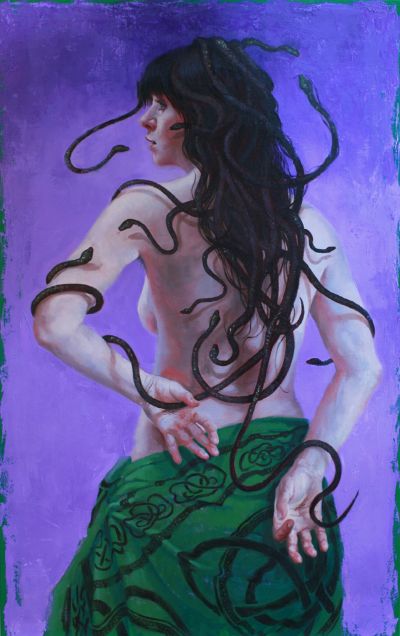
#notallmen and the gorgons
Yesterday I read a post from a French novelist I have been following on Instagram. He says:
"... we should, after the "me too" movement, think about lighter, easier thoughts that will allow our lives to be more pleasant. Some women have turned into hybrids, or gorgons detached from Notre Dame cathedral, crying wolf and reducing men to their bestial sexuality. [...] The real climate change lays in these women, in the genes of these moribund creatures who spit their hatred and leave men behind." He ends his rent with the inevitable: "Of course, some men are reprehensible. But not all." A French way to say #notallmen which to me is to sexism what #whitelivesmatter is to racism: endlessly stupid.
I remember feminists being called "bitter" in my family. This novelist prefers the words moribund (a very judicious and sad choice of word by the way - I wonder if he knows that rapists kill a little of the women they rape?) and gorgons crying wolf. I was thinking about that wolf this morning. At the age of 51, my share of men violence includes: 1 rape, 3 sexual assaults that I would describe as violent, countless "less serious" sexual assaults in the subway, on bicycle, etc,… plus the many aggressions that I guess can’t really be qualified legally. Like the three guys chasing me down the street and stopping 100m later, laughing their heads of, just to scare me. Or the one who decided to jog by my side and because I didn't answer his proposal to get a drink afterwards ended up throwing “dirty whore!” to my face before turning back. Or like that guy in a minibus stopped at the same traffic light as me, who formed with his hands the shape of a rhombus and waved his tongue inside (I think he meant : I'm going to lick your slutty pussy, but he thought it was funnier to express it with a gesture and he was right indeed, his minibus buddies found it hilarious). Or like this old pig working for Total - he told me he was, I am not making it up - who harassed me to such an extent during a trip from Douala to Abidjan that I had to ask the receptionist at the hotel where he was also staying to take me to my room. All these assaults, so numerous that we forget them, that make us get home shaking with fear, that make us give up on running, on going out alone, or even on acknowledging the smile of a stranger, because we don’t know what it could hide.
Before you go: "Gee, you sure attract pervs !!", ask the women around you. Not from a defensive posture, not ready to throw your #notallmen every second word, not from a privileged position. With compassion, with patience, ask, and listen. And you'll see. I'm no exception. In fact, I've been luckier than most. Perhaps then you'll understand that it's not hatred the women are spitting (and yet it could be, don't you think?), it's a cry for men’s violence to stop, a cry to you. And that will already be a step towards a more “pleasant life" that novelist is seeking.
"... we should, after the "me too" movement, think about lighter, easier thoughts that will allow our lives to be more pleasant. Some women have turned into hybrids, or gorgons detached from Notre Dame cathedral, crying wolf and reducing men to their bestial sexuality. [...] The real climate change lays in these women, in the genes of these moribund creatures who spit their hatred and leave men behind." He ends his rent with the inevitable: "Of course, some men are reprehensible. But not all." A French way to say #notallmen which to me is to sexism what #whitelivesmatter is to racism: endlessly stupid.
I remember feminists being called "bitter" in my family. This novelist prefers the words moribund (a very judicious and sad choice of word by the way - I wonder if he knows that rapists kill a little of the women they rape?) and gorgons crying wolf. I was thinking about that wolf this morning. At the age of 51, my share of men violence includes: 1 rape, 3 sexual assaults that I would describe as violent, countless "less serious" sexual assaults in the subway, on bicycle, etc,… plus the many aggressions that I guess can’t really be qualified legally. Like the three guys chasing me down the street and stopping 100m later, laughing their heads of, just to scare me. Or the one who decided to jog by my side and because I didn't answer his proposal to get a drink afterwards ended up throwing “dirty whore!” to my face before turning back. Or like that guy in a minibus stopped at the same traffic light as me, who formed with his hands the shape of a rhombus and waved his tongue inside (I think he meant : I'm going to lick your slutty pussy, but he thought it was funnier to express it with a gesture and he was right indeed, his minibus buddies found it hilarious). Or like this old pig working for Total - he told me he was, I am not making it up - who harassed me to such an extent during a trip from Douala to Abidjan that I had to ask the receptionist at the hotel where he was also staying to take me to my room. All these assaults, so numerous that we forget them, that make us get home shaking with fear, that make us give up on running, on going out alone, or even on acknowledging the smile of a stranger, because we don’t know what it could hide.
Before you go: "Gee, you sure attract pervs !!", ask the women around you. Not from a defensive posture, not ready to throw your #notallmen every second word, not from a privileged position. With compassion, with patience, ask, and listen. And you'll see. I'm no exception. In fact, I've been luckier than most. Perhaps then you'll understand that it's not hatred the women are spitting (and yet it could be, don't you think?), it's a cry for men’s violence to stop, a cry to you. And that will already be a step towards a more “pleasant life" that novelist is seeking.
19th of February 2024
Image: oil painting from Judy Takács - 2018
NB 1 : every 12 minutes, someone opens a rape case in South Africa.
NB 2 : the “climate change” analogy left me ... perplex.
Image: oil painting from Judy Takács - 2018
NB 1 : every 12 minutes, someone opens a rape case in South Africa.
NB 2 : the “climate change” analogy left me ... perplex.
Steps' blues
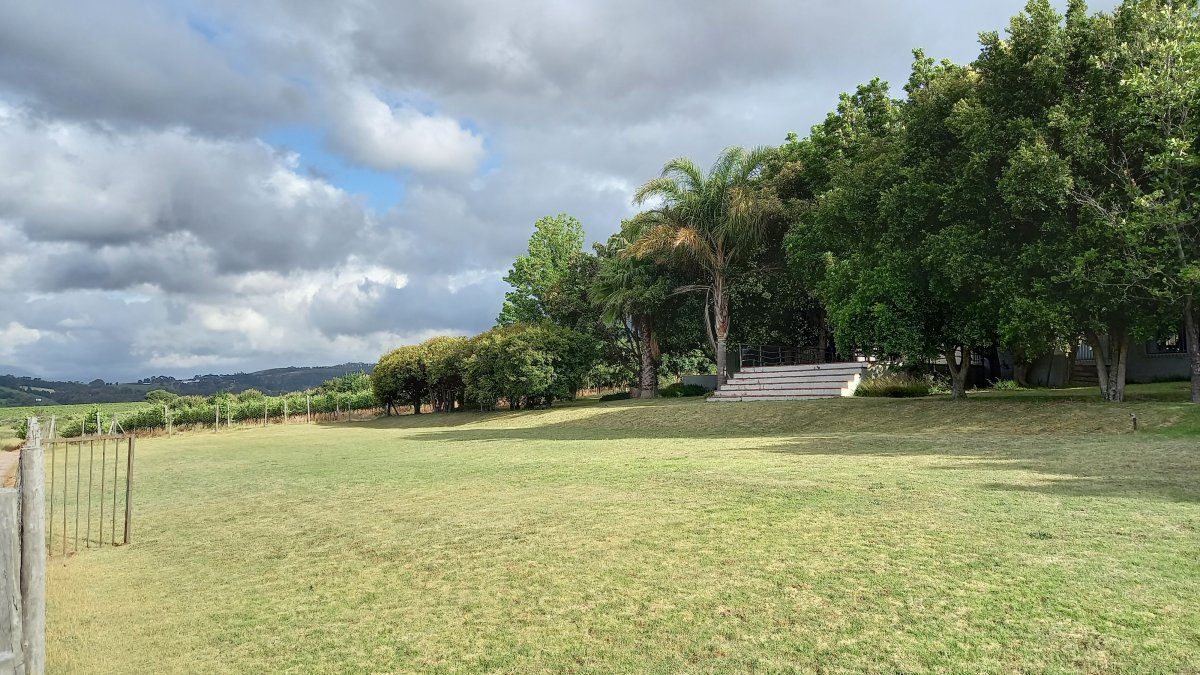
How beautiful were they, the six steps leading up to our house on the side of the koppi. At their foot ran a lawn. Exotic creatures occasionally visited its gentle slope, like a tortoise escaped from our neighbour's garden or Cape cobras during the day. And by night, caracals and cape-eagle owls. Below the lawn, rows of Syrah and Sauvignon sloped down to the village of Klapmuts. Further down and as far as the eye could see, more vineyards, bordered to the East by the Paarl mountains, and at the very end, invisible to our eyes but very much present, the ocean. How dearly do I miss those steps where we used to sit, shoulder to shoulder, in summers like in winters. In the mornings, a cup of coffee in hand, we would watch the mist tinted of gold by the first rays of the sun rising from behind the Simonsberg dissipate and the plain come to life. In the evenings, we would cheers to the stars lighting up one by one, to the vineyards disappearing in the dark and the mountains turning pink, orange, red and then black. The steps acted like a magnet, a rallying point. Friends sat on them, children played on them. They were our refuge, hosted our lockdowns. They heard our secrets, our declarations, our reconciliations. But as much as I loved those steps and the house they belonged to, they were not ours and came the time we had to go. Outside our new house in a new country, I found a step. Jut at the edge of the terrace, all alone and very not high. It was probably put there by a very cautious architect fearing the summer floods. A peculiar idea in a land long forgotten by the rains. In winter the terrace is bathed in sunshine, and I sit on the step. The memory of my dog who never missed a meeting of the steps sits besides me. Just one little step isn't very comfortable, but it does what's expected of it, just long enough to warm us up. And to thank it, I tell it the wonderful stories of my very loved six steps from the vineyards.
15th of August 2023
Paul's break-in
Three years ago, Paul suffered a break-in. He was thirty years old and was living by himself in a nice little flat in Paris. Two guys forced their way into his apartment late at night. Mistaking them for a Uber Eat delivery man, Paul opened the door and they let themselves in. At first, he tried to resist. He received a few blows, one of the thieves pulled out a knife, so, fearing for his life, he stayed still and silent. They stole his computer, his phone, a watch he loved dearly and even his bike. Such a terrifying experience that he, still today, struggles to fall asleep. Paul called the police as soon as the burglars left. The policemen asked him few questions, wrote down the list of stolen items, looked for fingerprints and asked Paul to come to the station and make a statement on the next day. There, he was told that two suspects had been arrested and were being questioned. One of them was wearing his watch. The policemen took Paul’s statement, asking many questions: had he locked his door properly? Didn't he brag too much in public about his beautiful watch? Didn't he tend to let just anyone into his flat? Was he certain it was indeed a burglary and not just a joke between friends that had gone wrong? Had he been drinking that night? Eventually, the policemen asked him if he really wanted to press charges. He replied that he would have to think about it. When he left the police station, Paul didn't go to work and didn't talk to anyone. He was confused, almost feeling ashamed of himself. He read again all the numbers he already knew. Just over 10% of watch burglary victims file a complaint. The others don't, because they know that the procedure will be expensive and will be dismissed by the judge in 70% of cases. And if the case goes to trial, only 1% of watch thieves will eventually be convicted. So, what was the point? Paul stayed home nursing his bruises and crying over his watch. Then he picked himself up. He didn't care if it was going to be long, expensive and if nobody will believe him. He was going to press charges. He obtained a bailiff report attesting of the break-in, he had his bruises assessed by a medical doctor, got a lawyer and filed for civil suit. Already 1,000 euro of expenses to carry. Luckily the judge didn’t choose to dismiss his case, there will be a trial. The proceedings lasted three years. Initially, Paul talked about the attack to his friends and family. But soon enough he stopped, he couldn't stand the doubt in people's eyes: "Did he not look for it ?", "And after all, we know that people who love their watches are dangerous, they lie, they destroy careers, they make false accusations to get rich or get noticed... Paul, well, maybe not, but … ". It was too painful, so he kept quiet. Throughout the proceedings, Paul had to undergo two psychological examinations. It was terribly trying. Always the same questions about the bruises (is he really sure he didn't fall in on his own?), about the lock on his apartment that had not been forced by the burglars (did the suspects really force their way in?), about his lack of reaction (why didn't he shout, the neighbors would have heard!) and about his tendency to show off his pretty watch a little bit too much. At the end of the first year, he decided to get help and see a shrink. That cost him an arm and a leg, but he could feel he was sinking. Also, he was constantly living with the fear of his assailants taking revenge on him for having dared to press charges. The trial ended today. The burglars walked free. Not enough evidence claimed the judge. The marks of blows on Paul’s body were not even considered as the judge concluded they could have been the result of a bicycle fall. The defendants' lawyer argued that Paul had opened the door himself and had never clearly told the burglars that he did not want them to take his watch. He emerged triumphant, saying: "Justice has been served". Paul, on the other hand, has lost everything. More than ten thousand euros of legal expenses, three years in waiting and of course, his watch. In the eyes of everyone, he is a liar, because the court said so. A liar, like most people who love their watches, as we all know. And that hurts him as much as the burglary. Thank goodness, Paul's story is not true. Victims of burglary, like victims of any other crime, are believed and defended. They are not accused of having provoked or invented the attack, that would of course be awful. Except when Paul is Pauline and when it's not her watch that's been stolen from her but her body. The justice system is failing victims of sexual violence and society is complicit.
12nd of September 2023
Elise will take care of everything
This text is the preface of my novel "Que quelqu'un le fasse !" (Someone has to do it!). Elise, the main character is a terrorist for some, an avenger for others. She is my sister, my warrior and my amazon, and she is born from the memory of the events told in this preface.
Gaborone, Botswana, December 2021.
I was impatiently preparing for the Christmas holidays: two weeks in Cape Town with the kids followed by a thirty-five kilometer hike with my daughter and her friends in the Cape of Good Hope national park. I was feeling happy to have gone through the first year of an unwanted move to Botswana without too much difficulty, was overwhelmed with happiness at the prospect of my fiftieth birthday celebration scheduled three months later and was satisfied of my progress in writing my fourth novel, this very one. CNN regularly was reporting the hearings of Ghislaine Maxwell’s trial. Maxwell was the companion of Jeffrey Epstein, an American billionaire pedophile. For decades, she had groomed teenage girls for him to rape. Like everybody else, I was listening in disbelief and horror. One morning, sitting in front of the screen, a very vague thought germinated in my mind, as if something familiar that was impossible to name was waking up deep inside me. It faded away. Then it reappeared a few days later. Slowly, the thought was growing, occupying more space in my mind. It was both unpleasant and impossible to identify, like an unexplained muscle pain felt in the morning wondering what movement one could have done the day before to cause it, or an itch for which one finds no trace of a bite bug. The days passed, and while I continued to follow the court case, the thought became more oppressive. Something had happened to me, something related to Epstein. But what, that didn't make any sense. Eventually, it began to clear up. Images, more and more distinct, started to come to me. The sea, the house, the room, and eventually, you. Your filthy face, your vicious fingers, your voice. The process took about a month. In Cape Town, during the long-awaited Christmas holidays, I knew exactly. First I saw a house. At Le Francois or maybe Le Robert, one of these two coastal villages of the island of Martinique. I saw the road that led to the bay, I felt in my muscles the memory of a scuba dive. Then I remembered what had brought me there: the argument with my parents, the high school awards, a party weekend. I was seventeen years and three months old. You, maybe forty. The results of the baccalaureate, the end of high school exam in the French education system, had been released the day before. A day that one doesn’t forget. I had gone to find out about the results with my friends Alexandre and Pauline, confident but of course with my heart a little tight. Then I returned home, just when the family was about to sit down for lunch. In the kitchen my parents were getting ready to bring the dishes to the table. I announced my score, as modestly as possible – we were not the kind who brag – hoping for a hint of enthusiasm, a tiny recognition. “I passed. With honors”, I said. My father, his eyes staring at the bowl of rice salad, said: “That is the least you could do.” My mother didn’t pronounce a word. They grabbed the dishes and we sat down to eat, all nine of us. My baccalaureate was not a subject.The diving club where I used to spend every Saturdays, and often Sundays, for two years, was organizing a weekend on the East coast of the island. The club had rented, or perhaps had been lent, a villa for two days of diving and partying. The start of the long summer holidays, the exploration of new diving sites and the baccalaureate awards were all reasons to celebrate. This small associative club had a particular importance for me. Not only was my passion for the sea born there, but it also represented a place of freedom. My happy place. I was a good diver and despite my young age, was given many responsibilities there: I would check the equipment before and after the dives, clean them, initiate novice divers to the sport. The atmosphere was always joyful, I felt good there. Safe. It was a breath away from home, from the suffocating omnipresence of my brothers and sister and my parent’s severe rules. My parents had categorically refused that I participate in the diving weekend making the weeks preceding it particularly conflicting. Leveraging on my honors, I insisted one last time, and, weary of the fight, they eventually let me go.Had you taken part in the morning dive? I don't remember. I do know, however, that you were sitting at the big table where all the divers were having lunch. The memory of the meal had come back to me. Delicious. Grilled chicken, rice, lemon and chilli. You were not one of the regulars at the club, your face was unknown to me. I remember you as a little old man. But what does old mean for a seventeen year old girl? Your features appeared to me with great clarity. Small and blue eyes, like marbles. Fine hair, a little long, a little neglected. You had a big belly, not huge, but big enough to be disgusting to the teenager I was. You were ugly, ruddy, and had drooping shoulders. I remember perfectly the feeling of fatigue, this pleasant weariness of the muscles numbed by the pressure of the sea water after the dive. The meal was over and I remember saying "I'm going to take a little nap" and slipping into a room I had spotted in the morning when I arrived, looking for a place to leave my backpack. I had closed the door behind me. There was a single bed, and large dark red or brown tiles on the floor. The room was cool. A ray of light was entering through a window, or a hole in the wall rather, like a long rectangle high up closed from the outside by a mosquito net. I had taken off my pareo and was lying down on the bed in my one-piece bathing suit. Probably the one I wore in the morning for the dive, still powdered with salt from the ocean. Lying on my back, I remember hearing the voices and laughter from the lunch table just outside the room. I was feeling good, slowly falling into sleep. And the door opened ajar. Immediately, I felt scared, I can't say why, a woman's instinct. I recognized you and pretended to be asleep, hoping to hear "Oh sorry, I didn't know you were there" and for the door to close, but already knowing deep down that it wouldn't happen. I remember hearing my heart beating in my chest, very hard. The door did close, but with you inside the bedroom. You approached the bed. I kept my eyes closed, unable to move. I knew. I was a virgin, a child, but I knew. You stood up next to the bed, I was paralyzed with terror, arms along your body, legs stretched out, all straight. You didn't say a word. You put your hand forward. You touched my thighs. I couldn't scream, I was too scared, too ashamed, my whole body was paralyzed. You touched me, closer and closer to my sex. Between my legs, you pushed the fabric of my bathing suit. Your fingers pushed inside me. You raped me. It lasted a very long time. My muscles were so tense they hurt. I remember my panic: if I have a cramp, I will scream, and if I scream, what will happen? You said, "You like it, huh? ". And then you took your fingers out of me, suddenly, I felt an acute pain. And you left the room without a word. I heard your chair scrape the floor just behind the door, and your voice joining the laughter and the conversation of the group. I stayed motionless for a long time, my legs and arms stiffened to the point of pain, my eyes staring at the ceiling in the half-light of the room. I didn't even dare to touch the elastic of my bathing suit and put it back in place. When the voices died down, I managed to get up. I left the room and walked to one of the scuba diving instructor I knew and trusted. I told him what you had done to me, he got very angry. I remember him calling you, taking you to the garage. I remember hearing a fight and then a car speeding off. Yours. And it all ends there. That same day, I forgot everything. That weekend, you, the house, absolutely everything, for thirty-three years. First, I felt disbelief. Then, when faced with the precision of my memories denying had become futile, astonishment. And finally, panic.
Like all women, I had experienced the daily misogyny and the accepted sexism of our patriarchal societies. Of course, I had my #metoo, lots of them. All sadly trivial, some scarier than others, some more humiliating than others, but nothing too abnormal. Nothing really serious. In fact, I was one of the privileged ones. I was one of those who had been lucky and was all the more aware of it because I have been living in countries where violence against women reaches unsustainable levels and where rape is so common it hardly shocks anyone. It is surely that which, coupled with my fierce will to doubt my own memories, that fueled an immense stupefaction. Me, the lucky one, the one who, because she was so privileged, had the strength and felt the duty to take care of the more damaged ones, you had raped me. For a few days, the feeling of disbelief stuck. Then I minimized. You had not been brutal. I had not become anorexic; I have never hated my body. You did not prevent me from loving men. You had penetrated me only with your fingers, it was perhaps not so serious. I checked a thousand times the legal definition of what you had done to me: you raped me when I was seventeen. Yes, it was serious, it was very serious. And this panic that had taken me, I could not ignore it. These memories were a wave and were about to engulf me. I knew I had to react, catch my breath, but how? You had raped me when I was seventeen, it was unbelievable but it was true, and I just couldn't get past that. My heart was drowning and my brain was no longer functioning, as if cast in concrete. I was living, laughing, eating, but I was as paralyzed as on that bed thirty-three years earlier.
Finally one evening I managed to speak. Two guardian angels listenned to me, hugged me and guided me. I sat at the table of the living room of our small apartment on the nineteenth floor, in Cape Town. The night was falling and the city was lighting up. The next day I was going hiking. My backpack was ready, my daughter and her friends would pick me up at six in the morning. The first lines came out with pain. You didn't deserve my attention, my evening, my paper and my pen. Writing to you was making me nauseous. And then, like my tears, the words flowed. I wrote ten pages; I told you all. You see, I have not forgotten a thing. I read my story several times, loud. I folded the sheets, slipped them into the top pocket of my backpack and fell asleep, nested in the sky of Cape Town. The next day, I felt the weight on the ten pages in my back for the entire exhausting and glorious first day of the hike. When we reached the chalet we would occupy for the night, I let my hiking companions prepare the barbecue outside and retired to the small kitchen. There I burned the ten pages, I burned you. I collected your ashes on a small plate and went out behind the shelter, out of sight of the team. I walked two or three hundred meters. The site was breathtakingly beautiful, set on the flank of the cliff of Cape of Good Hope. On the right, False Bay and the Pacific Ocean. On my left, the Atlantic. The wind had risen, pure, powerful. The ground was rocky, covered only with small succulents with thick, juicy leaves. I found a flat spot covered in sand. The sun was setting over the ocean. The air was getting cold. I could only hear the wind and see the sky exploding in reds and yellows. I knew what I had to do. I hesitated for a moment; you didn't deserve such a beautiful grave. And then I thought that indeed, it was there and nowhere else, because so far from everything, no one would ever find you. I was going to make you die alone. No one would ever hear your cries covered by the Cape of Good Hope wind. Nature was going to take everything away, you and my pain. I dug and buried your ashes. Then I trampled on your grave, spoiled it with tears and spit. And I joined the group. They pretended not to notice my red eyes, we dined happily, slept like babies and left the next day to unroll twenty-five kilometers of dunes, plains and rocky slopes. My bag was lighter.
The next day, with my muscles still sore from the hike and my feet full of blisters, I went to this tiny bay surrounded by large flat rocks where we used to picnic in the evening with the children during holidays, watching the sun set. The sea was freezing, the sky was a little gray, cloudy. I entered the water, she hugged me, cold and soft. Like an invincible shield of my body that you tried to dominate, of this very body you never had. I took my time, bathed twice. When I got home, I felt a new strength. Physical. You see ? I burnt you, I buried you, and I drowned you. At the exact point where two oceans mingle with an incredible power and where the purest air on the planet blows. You had no chance. Six months have passed. It would be vain to hope that everything will go back to the way it was. I have crossed your path; this I cannot change. Yet the extraordinary mechanism that protected me from you for three decades was right. Right to think that, while #metoo had made us all prouder, while I was writing this novel and living very close to the most beautiful place on earth: it is time, the stars are aligned, she's ready. I was. I know now and I survived you, stronger than ever. You, who wanted to dominate me, how ironic. Of course, I am more wary of men. I try not to hate them, but I'm on alert. I feel the danger more acutely, and more than ever I feel the pain and terror of women, those things left unsaid, theirs cracks and their wounds. How many pigs, I keep wondering, how many pigs like you have I come across without knowing it?
The anger has faded. The questions remain, still feeding my disbelief. I was a child. Mature maybe for my seventeenth. I loved reading, I enjoyed debates and the company of adults. I was independent, a bit of a leader. I loved the sea and dancing on zouk music, I loved my bike and my friends. I had two months of vacation left on the island before the start of my university years in Paris. Real life was just starting. I had just graduated with honors, I had dived in the morning and I wanted to take a nap. Just a nap. And you, you watched me excuse myself from the table. For two or three minutes, surrounded by your friends who were finishing the spicy chicken, you told yourself that you were going to get up, enter the room and push your fingers inside me. You did it. Then you came out of that room and you sat down at that same table. Maybe you had a coffee, or a rum. Why? This question will always remain with me. Did I annoy you, you miserable little man in your miserable little life, did you want to silence my freedom, my youth, did you want to soil the life that was awaiting me? Or am I looking too far, did you only see in me an easy prey, without consequence, to satisfy your vice? I will never know. Did you rape other women, other girls? Do you have a wife, did you lie to her all your life long or does she know, like Ghislaine Maxwell? Do you have sons? Do they know who you really are, are they too, like daddy, pigs?
Out of duty for all women, I will write. Because, tremble with fear you and your brothers, women are no longer silent, I may speak. Even if it means saying words that have nothing to do with me, that sound so incongruous, so out of place. Even if I'm afraid of embarrassed smiles and "sorry" and worst, of being told that I shouldn't have gone to this weekend.
Don't get me wrong. I will not forget you. I will never forgive you. If by some extraordinary chance my path crosses one of your friends, or a descendant, I will speak and watch them drown in shame. If one cursed day our paths cross, I will kill you. But I won't look for you. I don’t want to know your name, or if you are dead or alive. I have better things to do. You had no place in my life for thirty-three years of oblivion, you won't have any more now. Élise is in charge; all is fine.
Gaborone, Botswana, December 2021.
I was impatiently preparing for the Christmas holidays: two weeks in Cape Town with the kids followed by a thirty-five kilometer hike with my daughter and her friends in the Cape of Good Hope national park. I was feeling happy to have gone through the first year of an unwanted move to Botswana without too much difficulty, was overwhelmed with happiness at the prospect of my fiftieth birthday celebration scheduled three months later and was satisfied of my progress in writing my fourth novel, this very one. CNN regularly was reporting the hearings of Ghislaine Maxwell’s trial. Maxwell was the companion of Jeffrey Epstein, an American billionaire pedophile. For decades, she had groomed teenage girls for him to rape. Like everybody else, I was listening in disbelief and horror. One morning, sitting in front of the screen, a very vague thought germinated in my mind, as if something familiar that was impossible to name was waking up deep inside me. It faded away. Then it reappeared a few days later. Slowly, the thought was growing, occupying more space in my mind. It was both unpleasant and impossible to identify, like an unexplained muscle pain felt in the morning wondering what movement one could have done the day before to cause it, or an itch for which one finds no trace of a bite bug. The days passed, and while I continued to follow the court case, the thought became more oppressive. Something had happened to me, something related to Epstein. But what, that didn't make any sense. Eventually, it began to clear up. Images, more and more distinct, started to come to me. The sea, the house, the room, and eventually, you. Your filthy face, your vicious fingers, your voice. The process took about a month. In Cape Town, during the long-awaited Christmas holidays, I knew exactly. First I saw a house. At Le Francois or maybe Le Robert, one of these two coastal villages of the island of Martinique. I saw the road that led to the bay, I felt in my muscles the memory of a scuba dive. Then I remembered what had brought me there: the argument with my parents, the high school awards, a party weekend. I was seventeen years and three months old. You, maybe forty. The results of the baccalaureate, the end of high school exam in the French education system, had been released the day before. A day that one doesn’t forget. I had gone to find out about the results with my friends Alexandre and Pauline, confident but of course with my heart a little tight. Then I returned home, just when the family was about to sit down for lunch. In the kitchen my parents were getting ready to bring the dishes to the table. I announced my score, as modestly as possible – we were not the kind who brag – hoping for a hint of enthusiasm, a tiny recognition. “I passed. With honors”, I said. My father, his eyes staring at the bowl of rice salad, said: “That is the least you could do.” My mother didn’t pronounce a word. They grabbed the dishes and we sat down to eat, all nine of us. My baccalaureate was not a subject.The diving club where I used to spend every Saturdays, and often Sundays, for two years, was organizing a weekend on the East coast of the island. The club had rented, or perhaps had been lent, a villa for two days of diving and partying. The start of the long summer holidays, the exploration of new diving sites and the baccalaureate awards were all reasons to celebrate. This small associative club had a particular importance for me. Not only was my passion for the sea born there, but it also represented a place of freedom. My happy place. I was a good diver and despite my young age, was given many responsibilities there: I would check the equipment before and after the dives, clean them, initiate novice divers to the sport. The atmosphere was always joyful, I felt good there. Safe. It was a breath away from home, from the suffocating omnipresence of my brothers and sister and my parent’s severe rules. My parents had categorically refused that I participate in the diving weekend making the weeks preceding it particularly conflicting. Leveraging on my honors, I insisted one last time, and, weary of the fight, they eventually let me go.Had you taken part in the morning dive? I don't remember. I do know, however, that you were sitting at the big table where all the divers were having lunch. The memory of the meal had come back to me. Delicious. Grilled chicken, rice, lemon and chilli. You were not one of the regulars at the club, your face was unknown to me. I remember you as a little old man. But what does old mean for a seventeen year old girl? Your features appeared to me with great clarity. Small and blue eyes, like marbles. Fine hair, a little long, a little neglected. You had a big belly, not huge, but big enough to be disgusting to the teenager I was. You were ugly, ruddy, and had drooping shoulders. I remember perfectly the feeling of fatigue, this pleasant weariness of the muscles numbed by the pressure of the sea water after the dive. The meal was over and I remember saying "I'm going to take a little nap" and slipping into a room I had spotted in the morning when I arrived, looking for a place to leave my backpack. I had closed the door behind me. There was a single bed, and large dark red or brown tiles on the floor. The room was cool. A ray of light was entering through a window, or a hole in the wall rather, like a long rectangle high up closed from the outside by a mosquito net. I had taken off my pareo and was lying down on the bed in my one-piece bathing suit. Probably the one I wore in the morning for the dive, still powdered with salt from the ocean. Lying on my back, I remember hearing the voices and laughter from the lunch table just outside the room. I was feeling good, slowly falling into sleep. And the door opened ajar. Immediately, I felt scared, I can't say why, a woman's instinct. I recognized you and pretended to be asleep, hoping to hear "Oh sorry, I didn't know you were there" and for the door to close, but already knowing deep down that it wouldn't happen. I remember hearing my heart beating in my chest, very hard. The door did close, but with you inside the bedroom. You approached the bed. I kept my eyes closed, unable to move. I knew. I was a virgin, a child, but I knew. You stood up next to the bed, I was paralyzed with terror, arms along your body, legs stretched out, all straight. You didn't say a word. You put your hand forward. You touched my thighs. I couldn't scream, I was too scared, too ashamed, my whole body was paralyzed. You touched me, closer and closer to my sex. Between my legs, you pushed the fabric of my bathing suit. Your fingers pushed inside me. You raped me. It lasted a very long time. My muscles were so tense they hurt. I remember my panic: if I have a cramp, I will scream, and if I scream, what will happen? You said, "You like it, huh? ". And then you took your fingers out of me, suddenly, I felt an acute pain. And you left the room without a word. I heard your chair scrape the floor just behind the door, and your voice joining the laughter and the conversation of the group. I stayed motionless for a long time, my legs and arms stiffened to the point of pain, my eyes staring at the ceiling in the half-light of the room. I didn't even dare to touch the elastic of my bathing suit and put it back in place. When the voices died down, I managed to get up. I left the room and walked to one of the scuba diving instructor I knew and trusted. I told him what you had done to me, he got very angry. I remember him calling you, taking you to the garage. I remember hearing a fight and then a car speeding off. Yours. And it all ends there. That same day, I forgot everything. That weekend, you, the house, absolutely everything, for thirty-three years. First, I felt disbelief. Then, when faced with the precision of my memories denying had become futile, astonishment. And finally, panic.
Like all women, I had experienced the daily misogyny and the accepted sexism of our patriarchal societies. Of course, I had my #metoo, lots of them. All sadly trivial, some scarier than others, some more humiliating than others, but nothing too abnormal. Nothing really serious. In fact, I was one of the privileged ones. I was one of those who had been lucky and was all the more aware of it because I have been living in countries where violence against women reaches unsustainable levels and where rape is so common it hardly shocks anyone. It is surely that which, coupled with my fierce will to doubt my own memories, that fueled an immense stupefaction. Me, the lucky one, the one who, because she was so privileged, had the strength and felt the duty to take care of the more damaged ones, you had raped me. For a few days, the feeling of disbelief stuck. Then I minimized. You had not been brutal. I had not become anorexic; I have never hated my body. You did not prevent me from loving men. You had penetrated me only with your fingers, it was perhaps not so serious. I checked a thousand times the legal definition of what you had done to me: you raped me when I was seventeen. Yes, it was serious, it was very serious. And this panic that had taken me, I could not ignore it. These memories were a wave and were about to engulf me. I knew I had to react, catch my breath, but how? You had raped me when I was seventeen, it was unbelievable but it was true, and I just couldn't get past that. My heart was drowning and my brain was no longer functioning, as if cast in concrete. I was living, laughing, eating, but I was as paralyzed as on that bed thirty-three years earlier.
Finally one evening I managed to speak. Two guardian angels listenned to me, hugged me and guided me. I sat at the table of the living room of our small apartment on the nineteenth floor, in Cape Town. The night was falling and the city was lighting up. The next day I was going hiking. My backpack was ready, my daughter and her friends would pick me up at six in the morning. The first lines came out with pain. You didn't deserve my attention, my evening, my paper and my pen. Writing to you was making me nauseous. And then, like my tears, the words flowed. I wrote ten pages; I told you all. You see, I have not forgotten a thing. I read my story several times, loud. I folded the sheets, slipped them into the top pocket of my backpack and fell asleep, nested in the sky of Cape Town. The next day, I felt the weight on the ten pages in my back for the entire exhausting and glorious first day of the hike. When we reached the chalet we would occupy for the night, I let my hiking companions prepare the barbecue outside and retired to the small kitchen. There I burned the ten pages, I burned you. I collected your ashes on a small plate and went out behind the shelter, out of sight of the team. I walked two or three hundred meters. The site was breathtakingly beautiful, set on the flank of the cliff of Cape of Good Hope. On the right, False Bay and the Pacific Ocean. On my left, the Atlantic. The wind had risen, pure, powerful. The ground was rocky, covered only with small succulents with thick, juicy leaves. I found a flat spot covered in sand. The sun was setting over the ocean. The air was getting cold. I could only hear the wind and see the sky exploding in reds and yellows. I knew what I had to do. I hesitated for a moment; you didn't deserve such a beautiful grave. And then I thought that indeed, it was there and nowhere else, because so far from everything, no one would ever find you. I was going to make you die alone. No one would ever hear your cries covered by the Cape of Good Hope wind. Nature was going to take everything away, you and my pain. I dug and buried your ashes. Then I trampled on your grave, spoiled it with tears and spit. And I joined the group. They pretended not to notice my red eyes, we dined happily, slept like babies and left the next day to unroll twenty-five kilometers of dunes, plains and rocky slopes. My bag was lighter.
The next day, with my muscles still sore from the hike and my feet full of blisters, I went to this tiny bay surrounded by large flat rocks where we used to picnic in the evening with the children during holidays, watching the sun set. The sea was freezing, the sky was a little gray, cloudy. I entered the water, she hugged me, cold and soft. Like an invincible shield of my body that you tried to dominate, of this very body you never had. I took my time, bathed twice. When I got home, I felt a new strength. Physical. You see ? I burnt you, I buried you, and I drowned you. At the exact point where two oceans mingle with an incredible power and where the purest air on the planet blows. You had no chance. Six months have passed. It would be vain to hope that everything will go back to the way it was. I have crossed your path; this I cannot change. Yet the extraordinary mechanism that protected me from you for three decades was right. Right to think that, while #metoo had made us all prouder, while I was writing this novel and living very close to the most beautiful place on earth: it is time, the stars are aligned, she's ready. I was. I know now and I survived you, stronger than ever. You, who wanted to dominate me, how ironic. Of course, I am more wary of men. I try not to hate them, but I'm on alert. I feel the danger more acutely, and more than ever I feel the pain and terror of women, those things left unsaid, theirs cracks and their wounds. How many pigs, I keep wondering, how many pigs like you have I come across without knowing it?
The anger has faded. The questions remain, still feeding my disbelief. I was a child. Mature maybe for my seventeenth. I loved reading, I enjoyed debates and the company of adults. I was independent, a bit of a leader. I loved the sea and dancing on zouk music, I loved my bike and my friends. I had two months of vacation left on the island before the start of my university years in Paris. Real life was just starting. I had just graduated with honors, I had dived in the morning and I wanted to take a nap. Just a nap. And you, you watched me excuse myself from the table. For two or three minutes, surrounded by your friends who were finishing the spicy chicken, you told yourself that you were going to get up, enter the room and push your fingers inside me. You did it. Then you came out of that room and you sat down at that same table. Maybe you had a coffee, or a rum. Why? This question will always remain with me. Did I annoy you, you miserable little man in your miserable little life, did you want to silence my freedom, my youth, did you want to soil the life that was awaiting me? Or am I looking too far, did you only see in me an easy prey, without consequence, to satisfy your vice? I will never know. Did you rape other women, other girls? Do you have a wife, did you lie to her all your life long or does she know, like Ghislaine Maxwell? Do you have sons? Do they know who you really are, are they too, like daddy, pigs?
Out of duty for all women, I will write. Because, tremble with fear you and your brothers, women are no longer silent, I may speak. Even if it means saying words that have nothing to do with me, that sound so incongruous, so out of place. Even if I'm afraid of embarrassed smiles and "sorry" and worst, of being told that I shouldn't have gone to this weekend.
Don't get me wrong. I will not forget you. I will never forgive you. If by some extraordinary chance my path crosses one of your friends, or a descendant, I will speak and watch them drown in shame. If one cursed day our paths cross, I will kill you. But I won't look for you. I don’t want to know your name, or if you are dead or alive. I have better things to do. You had no place in my life for thirty-three years of oblivion, you won't have any more now. Élise is in charge; all is fine.
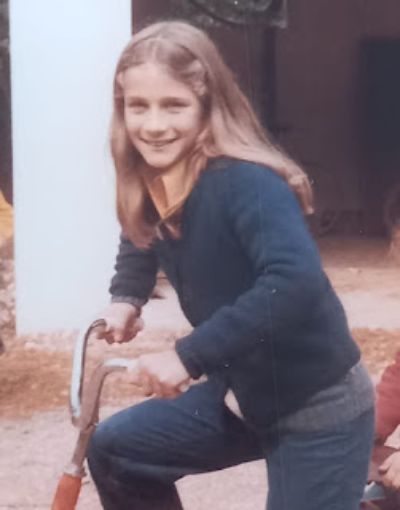
(I couldn't find a picture of me at 17. I might be 15 on that one).
I loved her
31st of March 2023